Six Boring Skills That Outlive Every Framework Hype Cycle

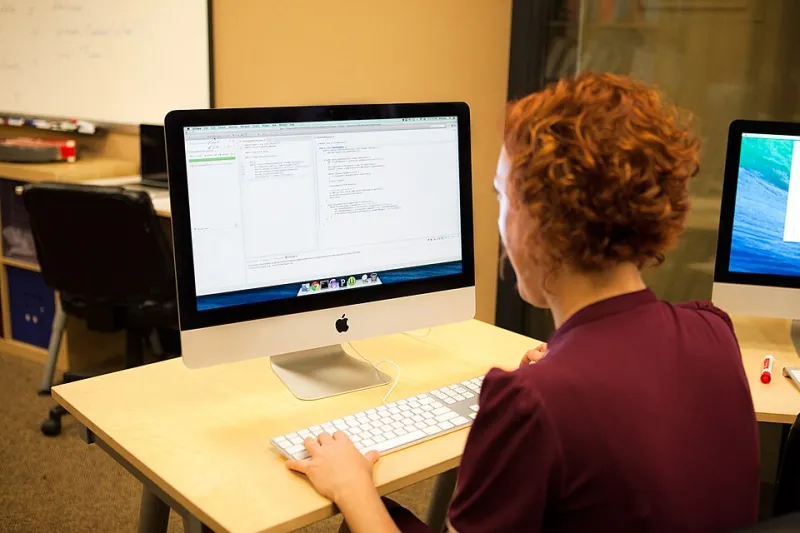
Photo: developer terminal command line screen dark room programming fundamentals, via images.stockcake.com
Every few years, the JavaScript world declares a new winner, and half of Twitter spends a week arguing about it. Meanwhile, the engineers getting promoted through all of that chaos share something in common: they're rock solid at the unglamorous stuff. The skills nobody makes viral content about are the same ones every job quietly runs on.
Here are the six that matter, why each one compounds, and how to teach yourself all of them for free.
1. SQL: The Skill That Outlives Every Stack
Apps get rewritten in whatever language is fashionable. Databases, on the other hand, hold onto their data for decades, and SQL is how you talk to almost all of them. Whether you end up in frontend, data, DevOps, or backend, someone will eventually ask you a question that's really a SQL question in disguise.
Why it compounds: Data outlives frameworks. The queries you learn today work identically against a startup's Postgres cluster or a Fortune 500 warehouse.
Roadmap: Start with SQLBolt for interactive basics, then work through SQLZoo practice problems. Once you can write joins without panicking, install SQLite locally and build a small query project — say, analyzing a public dataset from Kaggle.
2. Git: The Difference Between Collaborating and Chaos
Git isn't just version control — it's the shared language of every engineering team. Sloppy commits, mystery merges, and fear of git rebase mark you as a junior faster than any resume line.
Why it compounds: Every role, every company, every project uses it. The workflow habits you build now — small commits, readable messages, clean branches — make you easier to work with forever.
Roadmap: Learn the core flow (clone, branch, commit, push, pull request) with GitHub's Skills courses. Then deliberately break things: merge conflicts on purpose, reset a commit, recover a deleted branch. Comfort with Git disasters is a genuine hiring differentiator.
3. The Command Line: Your Fastest Interface to Everything
GUIs are fine until you need to rename 400 files, tail a log on a remote server, or automate a repetitive task. The terminal is where the real machinery of software lives, and it's identical whether you're on a Mac, Linux, or a cloud instance.
Why it compounds: Every tool you ever learn — Git, Docker, SSH, deployment scripts — assumes terminal fluency. It's the base layer under everything else on this list.
Roadmap: The Missing Semester from MIT is the single best free resource, full stop. Supplement with daily practice: force yourself to use the terminal for file navigation and Git for two weeks and it becomes automatic.
4. How the Web Actually Works: HTTP, APIs, and Requests
You don't need to memorize the spec, but you should be able to explain what happens when a frontend calls a backend: request, response, status codes, headers, JSON, authentication. Nearly every "mysterious" bug in modern development is actually an HTTP misunderstanding wearing a costume.
Why it compounds: REST, GraphQL, webhooks, microservices — the plumbing changes shape, but the underlying request-response model doesn't. Learn it once, use it everywhere.
Roadmap: MDN's HTTP overview is the canonical starting point. Then use Postman or plain curl to hit a free public API like OpenWeather and just... poke at it. Read the status codes. Break it on purpose.
5. Debugging: Reading Stack Traces Without Flinching
Here's the skill that separates people who ship from people who stall. A stack trace isn't an error message — it's a map, written specifically for you, pointing at the exact line where things went wrong. Most beginners never learn to read it.
Why it compounds: Debugging is meta-skill. The discipline of forming a hypothesis, testing it, and narrowing down the cause transfers to every language, framework, and system you'll ever touch.
Roadmap: Next time you hit an error, ban yourself from searching for 10 minutes. Read the full trace. Open the file and line it mentions. Add a print statement or breakpoint. Our earlier piece on debugging your way out of being stuck goes deep on this — but the short version is: the error message is the tutorial.
6. Reading Documentation: The Most Underrated Superpower in Tech
Tutorials expire; docs don't. The engineers who seem to "just know things" are usually just very good at navigating documentation — finding the actual page, skimming for the relevant section, and testing what they read immediately.
Why it compounds: Every new tool arrives with docs. If reading them is a superpower you already own, no new technology can ever fully block you.
Roadmap: Pick a tool you already use — React, Python, whatever — and read its official docs start to finish for one feature you thought you knew. Keep a docs tab open as your first stop, not your last resort, for a full week. It rewires your instincts fast.
Learn Them in This Order
If you're starting fresh: command line first (it unlocks everything), then Git, then HTTP basics, then SQL, with debugging and docs-reading developing alongside all of it as you build. None of these will trend on Hacker News next week. All of them will still be paying your rent in twenty years — no matter which framework gets declared dead this month.